The Story Of
MAKOI
1st of October, 2025 — Aron Friedman
Scroll
Luanda, 1987.
Water ran through the house.
We slept on the table.
Music was the only escape.
Music became his sanctuary.
From the streets...
To national recognition.
To breaking barriers.
Gold. Platinum.
He became a voice.
I represent millions.
My country is rich in talent...
...but poor in opportunity.
FROM LUANDA TO THE WORLD.
Act I — Origin. Act II — Ascent. Act III — Purpose. From Luanda to the world.
The Story of MAKOI
1st of October, 2025 — by Aron Friedman
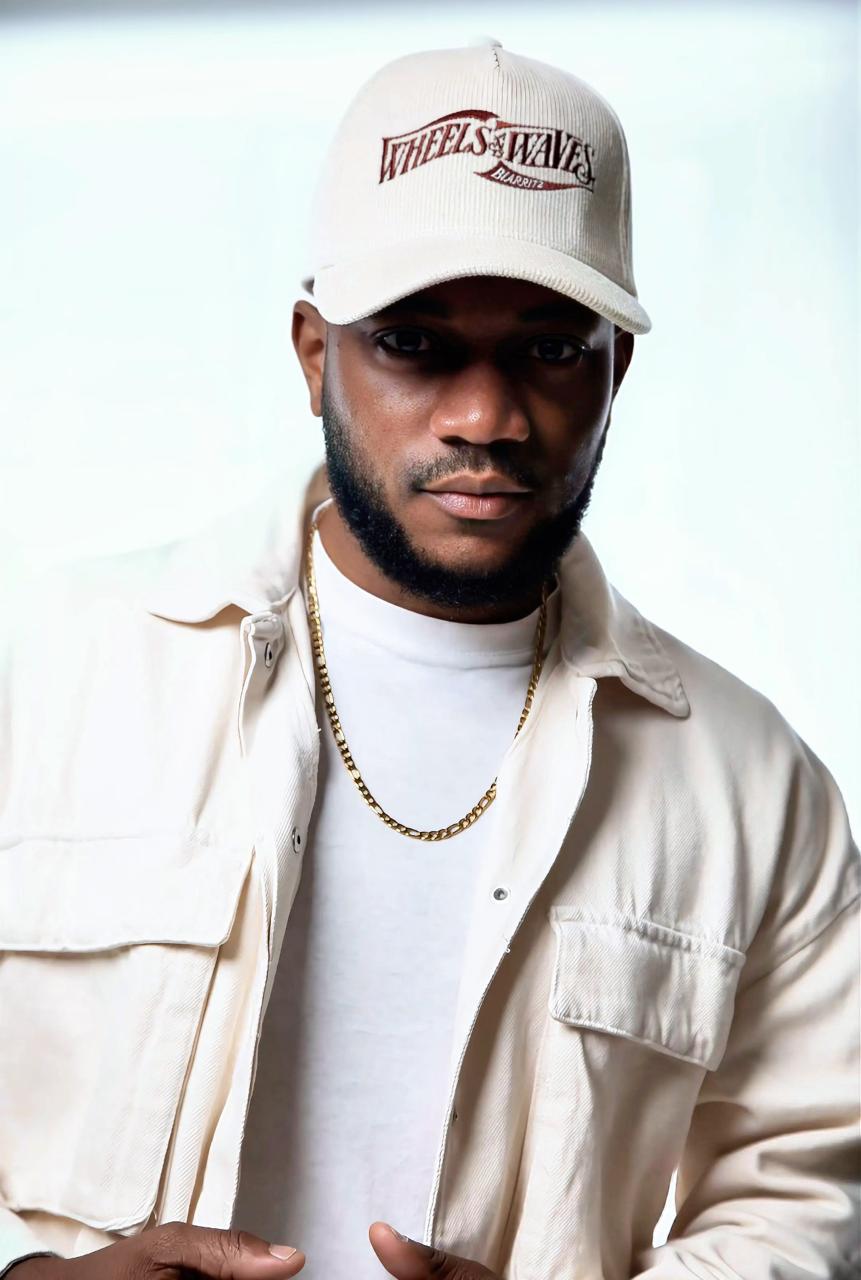
Francisco Alexandre Pedro – known to the world as MAKOI – is more than just a DJ and producer. He is a cultural force who is determined to carry the rhythms, flavours, and spirit of his motherland Angola onto global dancefloors. Blending deep-rooted African influences with European club energy, MAKOI's sound is both a medicine and a weapon of hope – unique, powerful, and designed to bring people together. His journey is nothing short of remarkable. He grew up in one of the poorest areas of Luanda, making music with the little means available to him. By his late teens, he had risen to national recognition, producing hits for some of Angola's biggest names. He broke barriers working with Titica, now one of Africa's most influential trans women, and earned international acclaim in Portugal with rapper Bispo, achieving gold and platinum hits. Each step reinforced his mission to give voice, visibility, and rhythm to those too often overlooked. Now based in the Netherlands, MAKOI is reinventing himself for the next chapter. Under his new moniker – meaning "protected by God, born to shine" in his native Kimbundu – he is set on introducing Angolan rhythms to Europe's club culture while building bridges between communities, genres, and generations. For MAKOI, music has always been more than just sound — it is a force of healing, resilience, and cultural pride.
Growing up
Francisco's love affair with music began after his parents divorced and he moved in with his sister. It was a difficult time, but the house was always filled with sweet sounds. The radio was blasting 24/7, introducing him to a wide range of music. "My sister played The Beatles, Frank Sinatra, Aretha Franklin, ABBA, Bob Marley, Gipsy Kings, Nat King Cole, Louis Armstrong, Marvin Gaye, Michael Jackson, and so many others from the Motown era. Music became my sanctuary – a way to cope with missing my dad." Growing up in one of Luanda's poorest outskirts was tough. "Our home was on a hill. When it rained heavily, the water would flow right through the house, and we had to sleep on the table." But music was a driving force. At age 15, Francisco started his own hip hop group. Gaining traction as the cleanest rapper on the block, he earned his MC name Detergente. "In freestyle battles, when someone insulted my mom or tried to put me down, I would always answer back with positivity. I won without offending or swearing." The cost of having their album produced would be $50, a sum that Francisco wasn't able to pay. He knew he had to learn about music production himself. He got his first desktop from his sister, but producing still posed many challenges. "The computer was so slow I had to turn it on at 7AM and wait four hours for it to start. The production software then took another two hours to load." This didn't stop Francisco from pursuing his dreams. Talent and perseverance would propel his career to great heights.
Breaking through
As gang violence increased, Francisco studied to be a priest. "There were many guitars in church, and I could play them all day long." Then, at 18, famous rapper OG Vuino discovered his beats and visited his neighbourhood. Impressed by Francisco's skills, he brought him into the industry, giving his music nationwide recognition. Within two years, Detergente had become a household name in the Angolan music scene, producing hit songs for many of the country's biggest stars. Francisco has always been the type of person who brings people together. He started scouting young talent in his neighbourhood, bridging the gap between the ghetto and the inner city. "I produced their albums and pitched them to big labels. Many of them got signed." Today, most of the well-known artists in Angola between 30 and 40 were discovered by Francisco. One of them is his niece, Shelby Da Mata, who was nominated for a Kora Award – at the time the most prestigious music award in Africa. That same year, Francisco worked with Titica, at a moment when homosexuality was not accepted in Angola. "I knew her talent deserved to be heard, no matter what others thought." He produced some of her biggest songs and helped her build a platform. Today, she is one of the most influential trans women in Africa, performing in Brazil, Portugal, and across the continent.
Going international
After his accomplishments in Angola, Francisco aimed to conquer the world. When he left for Portugal in 2014, he only had $30 in his pocket and even slept on the streets. But he found his footing while teaming up with emerging rapper Bispo, who is now a household name. Their song "NÓS2" gained over 26 million streams worldwide. Francisco became one of Portugal's top 5 producers and the first Angolan producer to receive gold and platinum certification from Sony Music Portugal. Francisco was eager to channel his international fame for the elevation of Angola's music industry. Upon his return, he noticed women there had no proper platform in hip hop. He produced an album for Eva Rap Diva and co-wrote her politically charged lyrics. They won all major categories at the Angola Hip Hop Awards, crowning her Queen of Angolan rap. Most recently, she has even been elected as a member of the Portuguese parliament. Furthermore, Francisco joined forces with XYAMI to create the talent project XYAMI Super Stars and launched "Tribal Talents" with OG Vuino, discovering artists who are now staples of Angolan culture.
Reinventing himself
As a result of Francisco's commitment to Angolan culture, he was named a member of the Globos Academy of Angola, becoming the youngest person to hold this position. He was also nominated for Best African Producer and Most Influential Angolan Celebrity Abroad. For Francisco, it has always been about much more than music. "I represent millions of young people in my country who have had their dreams stolen by a corrupt government. Through my music, I give my generation a voice." He dreams of carrying Angola's flag to the world's biggest stages and opening music schools for disadvantaged youth. Now based in the Netherlands, Francisco reinvents himself under the name MAKOI – meaning "protected by God, born to shine" in Kimbundu. His mission: To bring Angolan culture to global dancefloors. To connect worlds through rhythm. To turn pain into art — and art into change.
MAKOI's incredible life story is a testament to the power of determination, faith, and passion. From the outskirts of the ghetto to global stages, he embodies what music at its best can be: A bridge. A medicine. A weapon of hope.
Interview by Aron Friedman (Music Journalist, Amsterdam, The Netherlands) © 2026 MAKOI. All rights reserved.